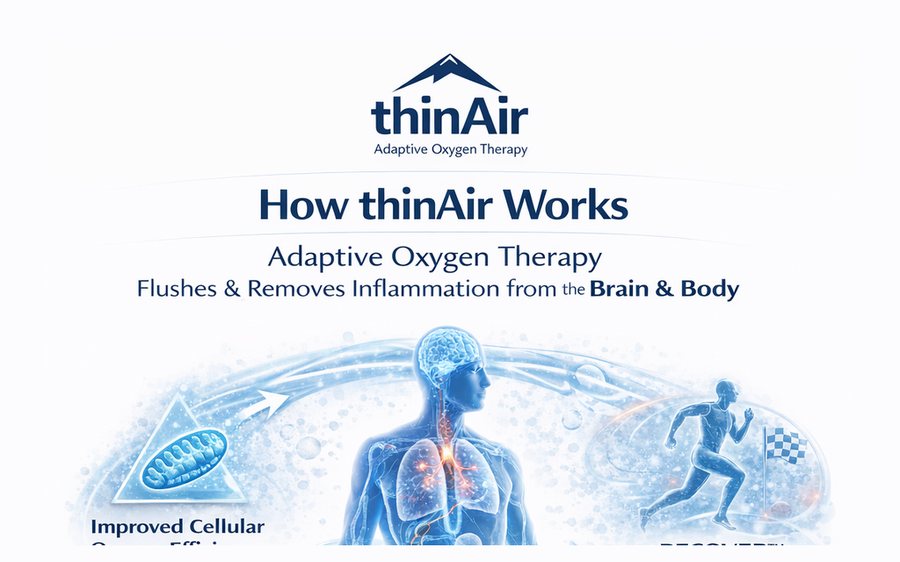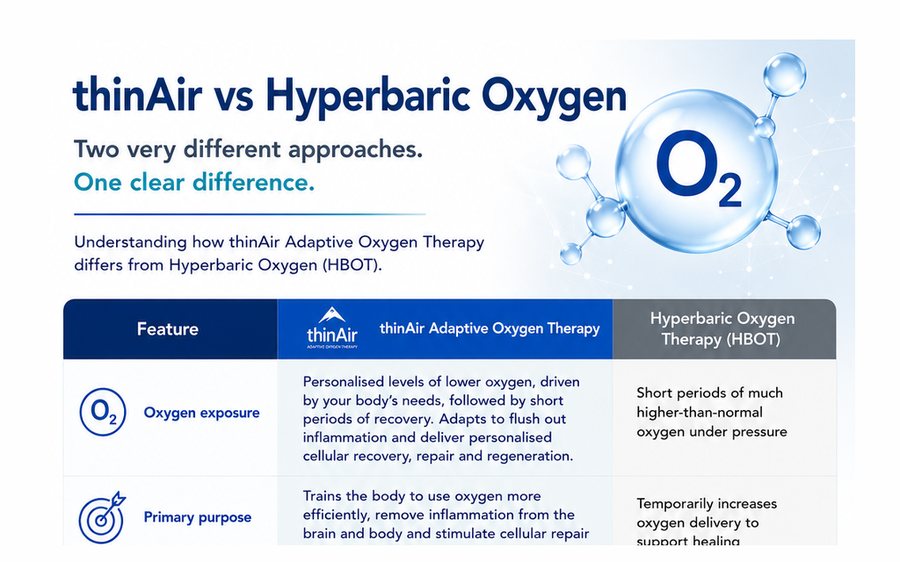
thinAir vs HBOT: what's the difference?
Two very different approaches to oxygen.
Read →
The 2019 discovery behind adaptive oxygen therapy.
In 2019, the Nobel Prize in Physiology or Medicine was awarded to William Kaelin, Sir Peter Ratcliffe and Gregg Semenza for discovering how cells sense and adapt to oxygen availability.
Scientists revealed that our cells rely on a finely tuned oxygen-sensing system to regulate energy production, tissue repair, blood-vessel growth and recovery from injury. Crucially, this system responds not to constant oxygen levels, but to changes in oxygen availability.
This breakthrough transformed our understanding of health, performance and healing. When oxygen levels change, cells switch on specific genes that help the body adapt: producing energy more efficiently, growing new blood vessels and supporting repair.
thinAir delivers personalised, intermittent changes in oxygen concentration, designed to activate the body's natural oxygen-sensing pathways without physical stress. Our Adaptive Intelligent Software reads your body's response and adjusts the oxygen level in real time.
thinAir doesn't override the body's biology. It works with it, helping cells do what they're designed to do: adapt, repair and thrive.
Book a consultation or find your nearest thinAir location.
We use essential cookies to run this site. With your permission we'd also measure how the site is used and which adverts bring people here, and let client videos and location maps load from Vimeo, YouTube and Google Maps. Cookie policy